Grist Syrah 2023
Grist Vineyard Syrah, Dry Creek, Sonoma 2023
raspberry • herbed black olive
Syrah has always been the varietal that speaks to me most - it has a wild elegance and tension that comes out when done in a restrained style. In 2016, I moved to the Northern Rhône for the year just to understand this grape better.
Vineyard
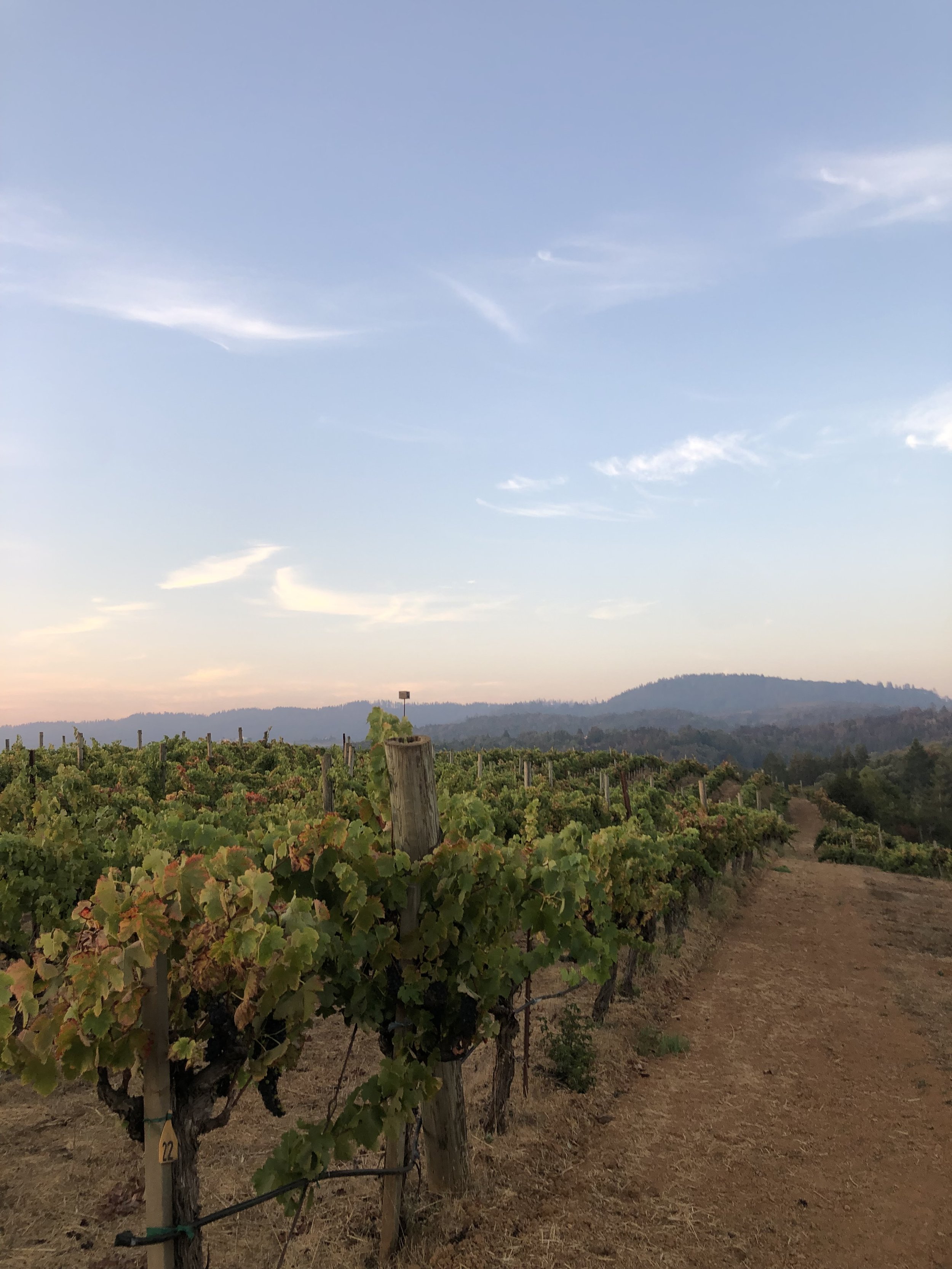
Sitting high above the Dry Creek Valley atop Bradford Mountain (1,000 feet elevation), this Syrah has more in common with the Sonoma Coast than with Dry Creek Valley. Only 15 miles from the ocean as the crow flies and perched up above the fogline, Grist Vineyard has a long, temperate growing season that allows for complex and developed flavors at lower potential alcohol. There’s a fantastic natural acidity to the grapes from here that brings freshness and verve. The soils here are Boomer loam, a red volcanic rock that gives low yields and concentrated fruit. The vines are trained in double cordon.
This bottling comes from the old vine Syrah block, planted in 1983. Just adjacent to the old vine Syrah block are a few rows of Viognier planted in 1996. The intention had been to plant more Syrah, but a nursery misidentification resulted in Viognier being planted. Given the kismet of it all, the Hambrechts decided to keep the Viognier for co-fermenting with the Syrah. The yields on the Viognier vary wildly each year, but in 2023 about 5% Viognier was co-fermented with the Syrah. Beyond counterintuitively giving more color to the wine, I find that co-fermenting with Viognier brings out the lifted, pretty aromatics of Syrah.
Vinification
While 2023 was a late harvest across the board in California, things were particularly delayed in the old vine Syrah block at Grist. Generally picked on Labor Day, I picked these vines on October 7th in 2023. While these vines have a fantastic history to them, as a suitcase clone they are virused and have red blotch. As the growing season wore on and the leaves turned redder, the photosynthetic capacity of the vine to produce and store sugar was dramatically reduced. The grapes had an exceptionally long hang time, yet came in at an alcohol a smidge below that of 2022 (13.6% vs 13.8%).
This wine is more approachable than 2022 right now. It has juicy raspberry aromatics on the nose, and the tannins have a white pepper feel in the mouth - delicate, but present and redolent of the 30% whole cluster stem inclusion. The perfumed quality of Viognier is more present in 2023 than in 2022, giving a gorgeous lift. On the palate, I get classic herbed black olive and lemon oil.
The Syrah was 30% whole cluster, co-fermented with about 5% destemmed Viognier. Aged for 11 months in 6th use French oak barrels.
History
Grist Vineyard is named for the old grist mill on the property from when the mountaintop was first planted to Zinfandel in the late 1800s by Dry Creek’s early Italian immigrants. The Hambrecht family has farmed Grist Vineyard for 4 generations.
This organically farmed Syrah block was planted in 1983, unusually old for California Syrah. The oldest Syrah vines in the state are found in heritage mixed vineyards where they are interplanted with Grenache, Mission, and Alicante, but the oldest modern plantings began in 1975 with Gary Eberle’s cuttings from Chapoutier in Tain l’Hermitage. In 1977, Joseph Phelps released the first varietal bottling of Syrah in the 20th century (Patrick Comiskey’s book ‘American Rhône’ presents an excellent history of Syrah in California). In 1980, Jim Clendenen, Adam Tolmach, and Bob Lindquist convinced a grower to graft a block of Petite Sirah to Syrah (Black Bear Block). Bill Hambrecht and his neighbor Fred Peterson, both Rhône lovers, decided to plant Syrah on Bradford Mountain soon after using Gary Eberle’s cuttings by way of Ray Teldeschi.
These are the oldest vines at Grist, as prior plantings were on the ill-advised AXR rootstock that succumbed to phylloxera in the early 80s. The old vine Syrah block is Estrella clone planted on St George rootstock. St George is known for being drought tolerant, vigorous, and for producing looser elongated clusters. Looser clusters result in less disease pressure, and fewer interventions required to keep the fruit quality pristine. Though St George felt out of favor for many years for being overly vigorous (with drought sensitive 101-14 gaining precedence), with old vines on thin topsoil over volcanic rock this added vigor manages to keep the yields reasonable. As climate change accelerates, viticulturists like Steve Matthiasson turn back to St George for its drought tolerance.
Artwork
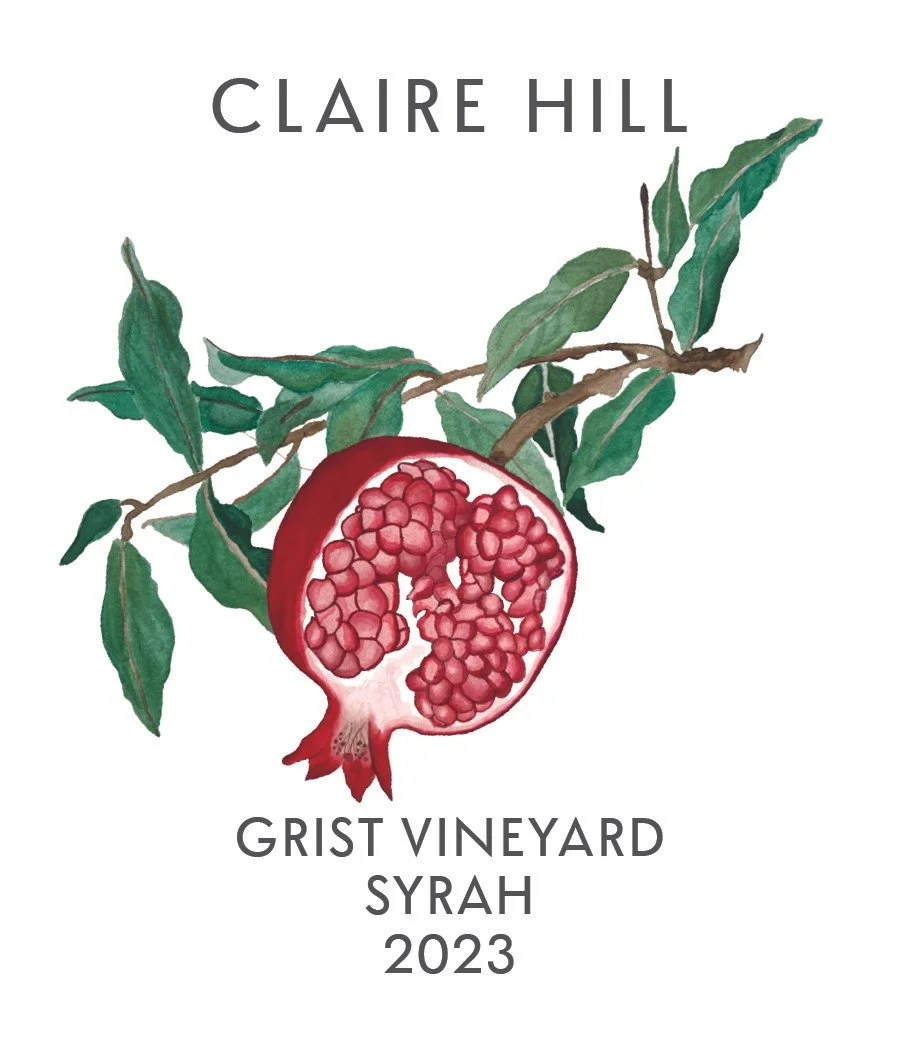
Beyond the pomegranate aromatics this wine has, the Hambrechts have pomegranate trees planted on the vineyard. Meyer lemons, avocados, olives, and a gorgeous old fig tree flourish here.
4 barrels made
$50
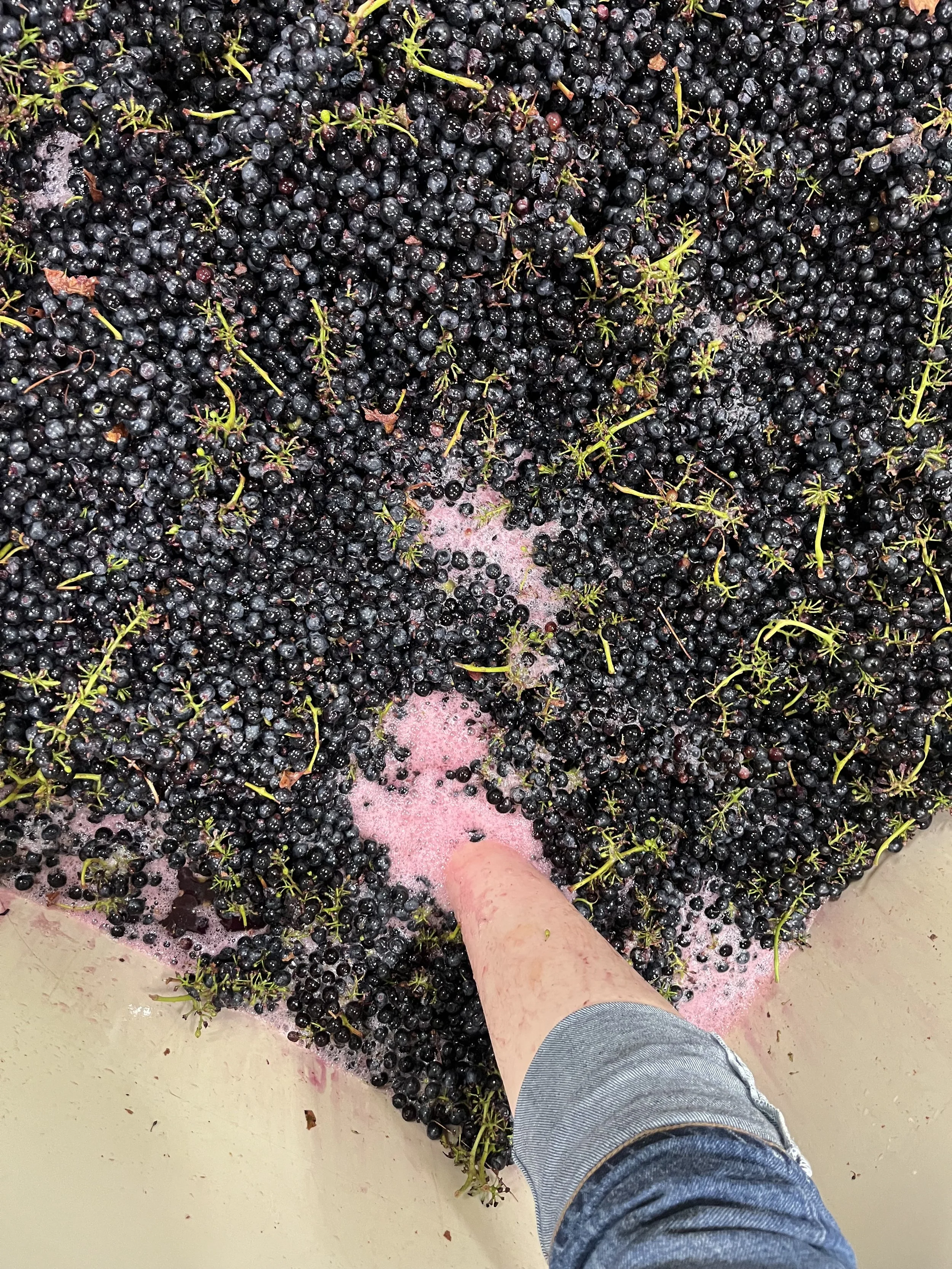
pigeage
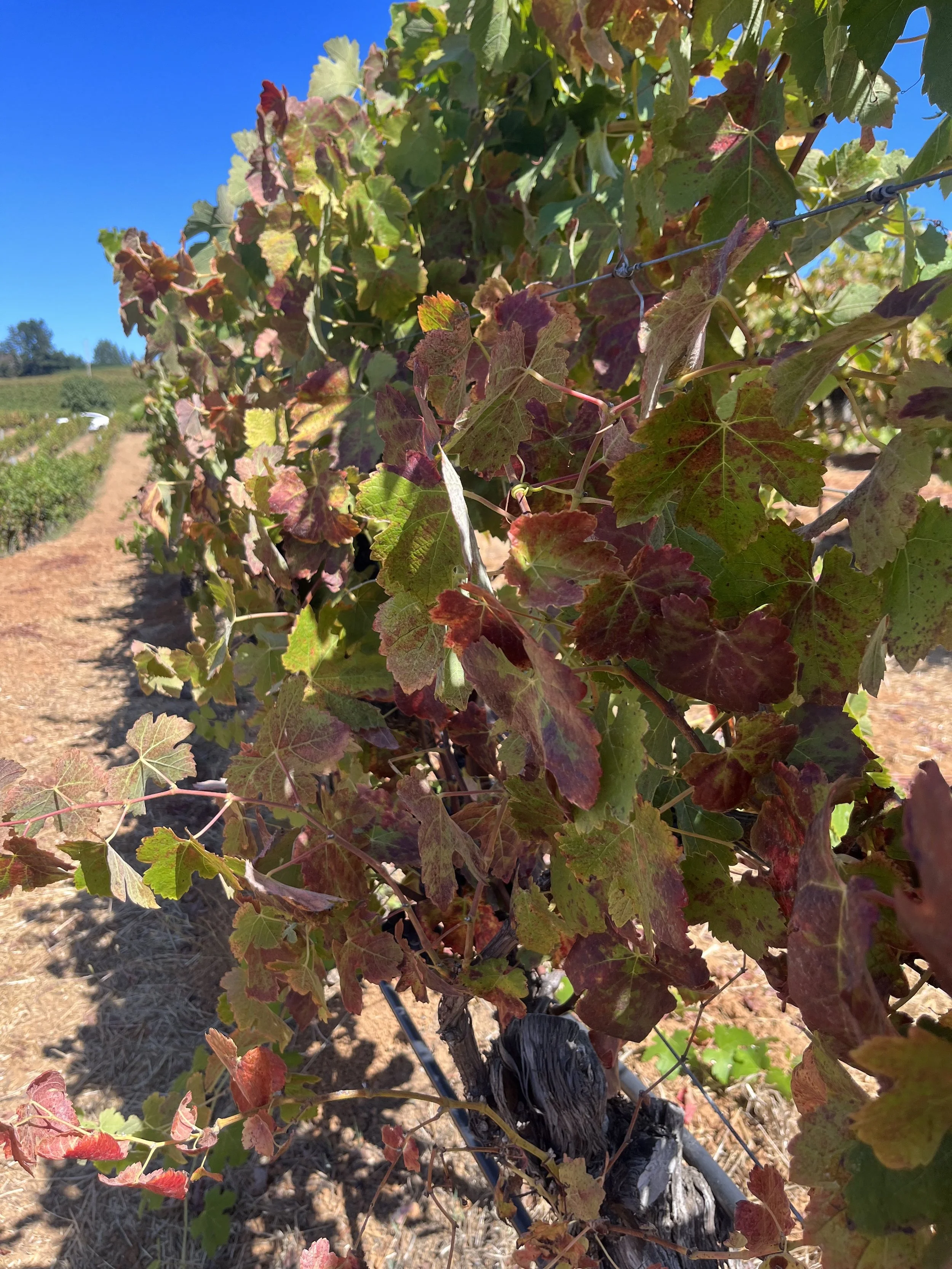
red blotch at Grist in the old vine Syrah, October 2023
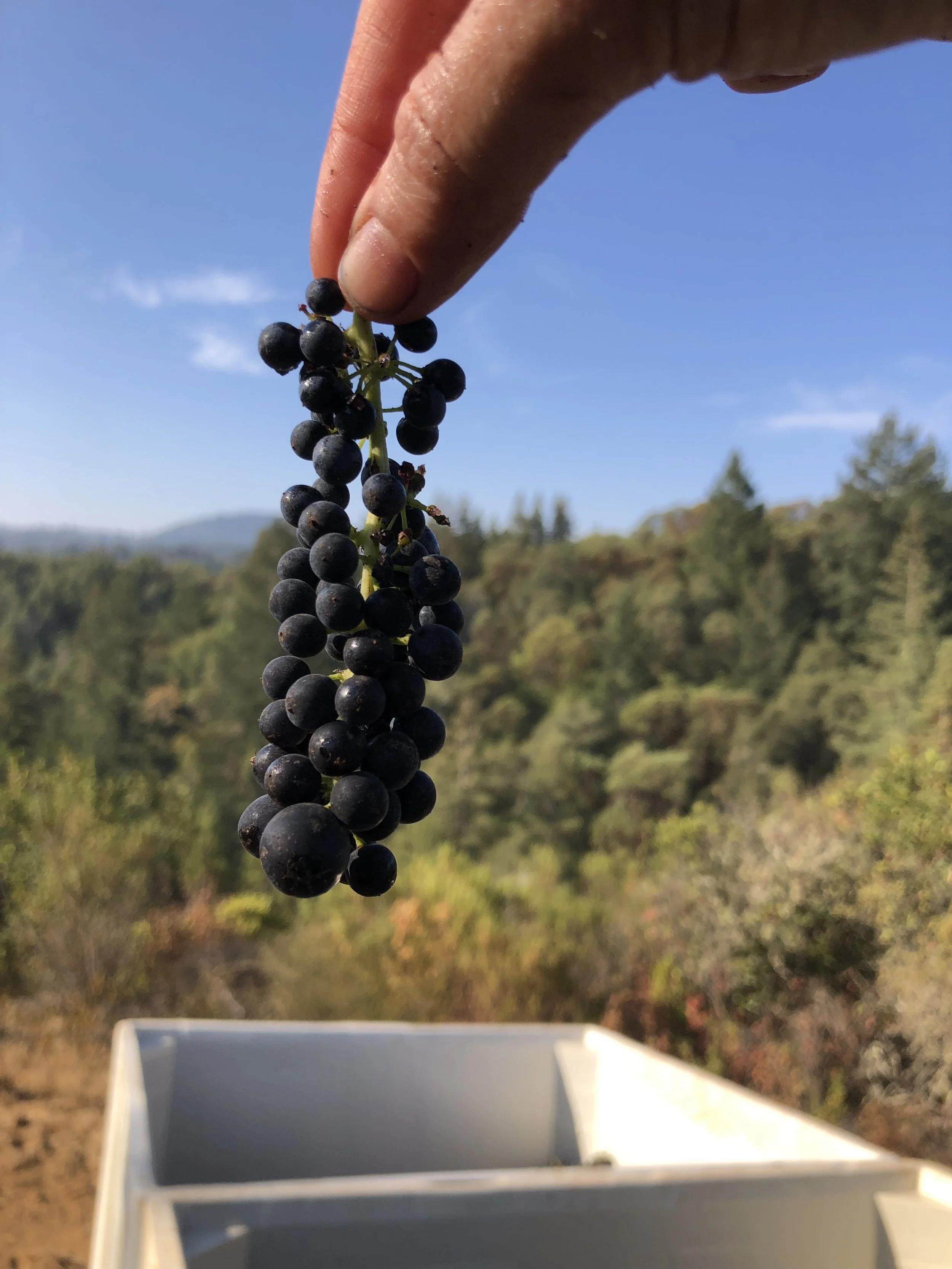
tiny little berries, super concentrated